Speed
Near-zero JavaScript by default. The page is finished before a heavier site has even started assembling itself.
Most sites are slow, then someone is paid to speed them up. We build on Astro, so yours arrives fast the day it launches: a custom site that loads before your competitor’s spinner has stopped. It is the same stack every brand we own runs on.
Spruce and Datum are both live right now, both built on Astro. Most agencies pitch a framework they have read about. We are pitching the one we bet our own businesses on.
Astro builds your pages ahead of time and ships them as finished HTML, adding only the small amount of JavaScript a page genuinely needs. A traditional site does the opposite: it assembles every page on request and sends the browser a heavy bundle of code, most of which the visitor never uses.
For you, that difference shows up as four business outcomes, not four technical features: pages that load fast, HTML that Google can read and rank cleanly, a site with no database or plugins to attack or patch, and a hosting bill that is a rounding error instead of a monthly worry. If you want the deep version, we wrote why your site is slow, and the fix.
Near-zero JavaScript by default. The page is finished before a heavier site has even started assembling itself.
Clean, server-rendered HTML Google crawls instantly, strong Core Web Vitals, and structure built in from the first commit.
No database, no PHP, no plugin sprawl. There is simply far less surface for anything to attack or break.
Static hosting on Vercel or Cloudflare instead of a WordPress maintenance bill. Fast to run, cheap to keep.
WordPress runs a huge share of the web and can be made fast. But left alone it gets heavier every year: plugins, page builders and a theme built to do everything, all shipped to every visitor. Astro starts from nothing and adds only what a page needs, which is why the speed, security and cost gap is real.
The one honest tradeoff is content editing. WordPress hands you a familiar admin out of the box; with Astro we set the editing layer up deliberately, usually a Sanity login so you can edit your own content safely without the weight. If you are already on WordPress, that is a WordPress to Astro migration, with every redirect mapped so your rankings survive the move.
Speed is not something we sprinkle on at the end. It is engineered in at every step, which is why the finished site is fast on day one instead of a rescue job six months later.
An Astro site is fast because of the whole stack behind it, not one framework. This is the machinery we run, in full, on our website speed optimisation service.
Every site below is built on Astro, live right now, and operated by us. Click through and run any of them through Lighthouse yourself.

The brand we grew from zero to over a million dollars a year on $0 ad spend. Website, online booking and the field systems that run the operation, all built in-house.
Visit the live site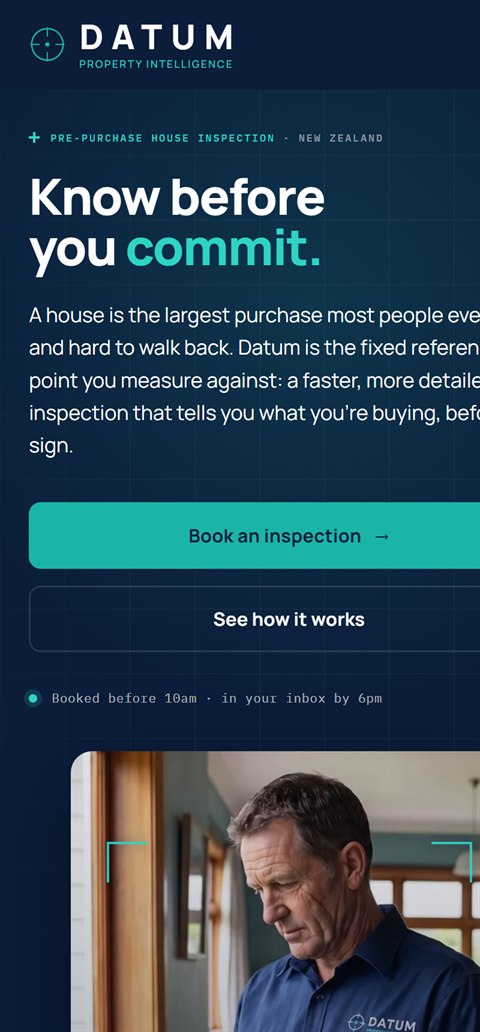
A pre-purchase inspection brand and a fast website built to turn Auckland search traffic into booked inspections.
Visit the live site
A review publication built from scratch, structured to rank and to be cited by AI search from the first article.
Visit the live site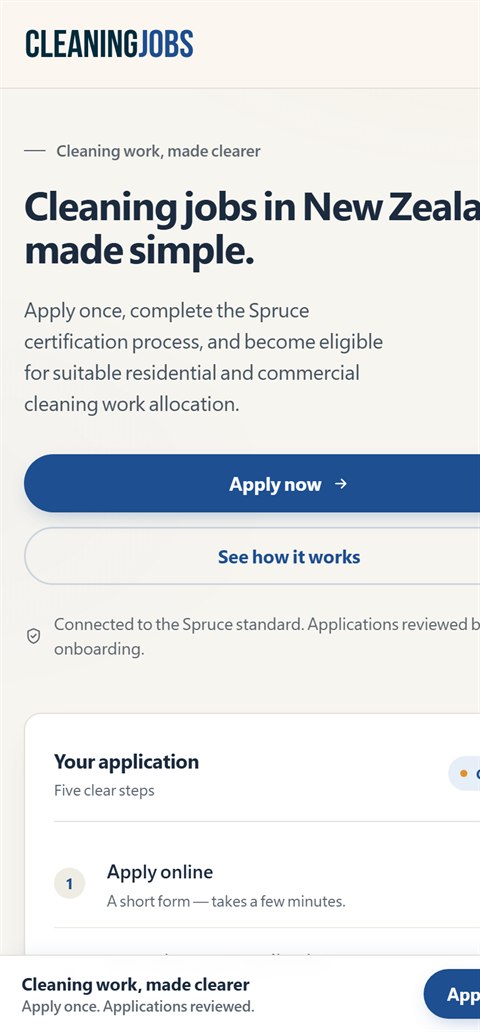
A recruitment site and applicant funnel that keeps a growing team staffed, without paying for job boards.
Visit the live site
A challenger agency brand and site, with the programmatic SEO system behind it. Built end to end, live and ranking.
Visit the live siteAstro is a modern web framework that builds your pages to plain HTML ahead of time and ships almost no JavaScript to the browser. A traditional site assembles each page on every visit and sends a pile of scripts before it can respond; an Astro site hands over a finished, lightweight page. Less to assemble and less to download means it loads fast, even on a phone on mobile data, and you can test it yourself in Lighthouse.
Yes, and for the right reasons. Google sees clean, server-rendered HTML it can crawl instantly, the pages score well on Core Web Vitals because they are genuinely fast, and there is no plugin bloat slowing things down. Speed is a ranking input and a conversion input, so a well-built Astro site helps you rank and convert from the same traffic.
Yes. You do not need to touch code to change text. Our default is a Sanity login: a clean editor, kept separate from the code, where you safely change your own content. Simple sites that rarely change can stay on a lighter Git-based setup instead. Either way you get the speed of static with the convenience of a real content editor.
Usually, yes. A static-first Astro site hosts on modern platforms like Vercel or Cloudflare for free or a few dollars a month, and there is no database, no theme and no plugins to patch. A WordPress site tends to carry hosting muscle to cope with its weight plus an ongoing maintenance and update bill. The running cost is lower and there is far less that can break.
Yes. We run it as a dedicated WordPress to Astro migration: we keep your content, map every old URL to a 301 redirect so your rankings come with you, then rebuild the front end in Astro. Done properly, you keep your search presence and simply lose the weight.
Yes. Static-first does not mean static-only. Astro pairs with Shopify or a headless commerce back end for stores, and handles forms, bookings, search and other dynamic features through integrations and serverless functions. You get the speed of a static site with the function of a dynamic one.
Tell us what you are building and who you are up against. We will show you what an Astro build would do for you, and where to start. Or send us your current site for a free speed teardown first.